Gift Cards in 2026: Expiration, Fees, and What Happens If the Store Closes
This post is general information about US gift-card law, not legal advice. Gift-card rules differ by state and by card type, and the law changes — California's cash-back limit, for example, changed on April 1, 2026. For a large balance or a bankruptcy claim, talk to a consumer attorney in your state.
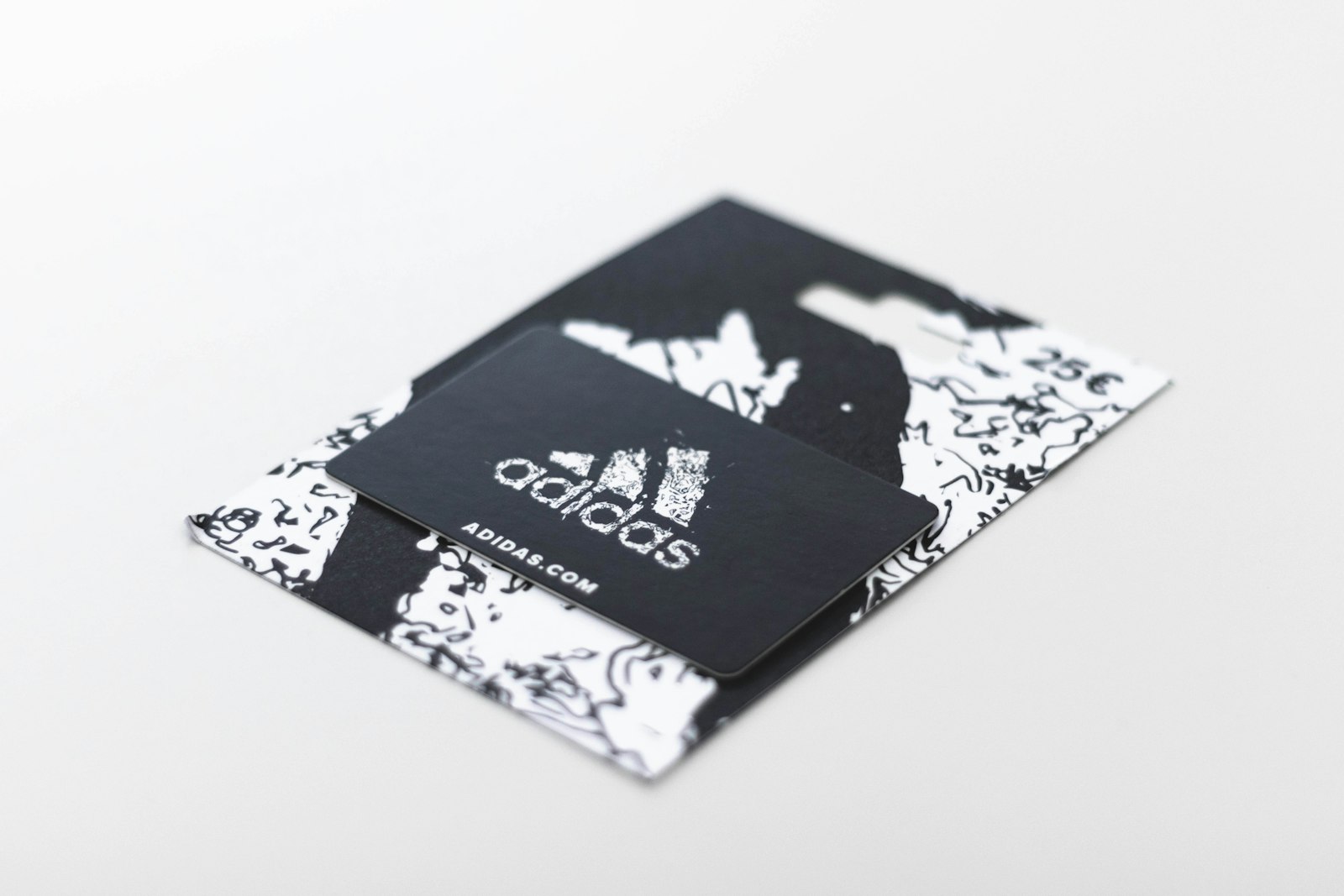
Gift cards are the most popular present in America, and the most misunderstood. Shoppers treat them like cash, but a gift card is not cash — it is a promise from one business, governed by a federal law with a five-year clock, fee rules with a twelve-month trigger, and a patchwork of state laws that can make the same $50 card last forever in one state and drain to zero in another. And if the store closes, that promise can become a place at the back of a very long line of creditors.
This post works through the federal rules first, then the state laws that beat them, then the math on a real $50 card, and finally what happens when the store shuts its doors. Every rule below is cited to its source, checked November 27, 2026.
The federal floor: the CARD Act's 5-year rule
The Credit Card Accountability Responsibility and Disclosure (CARD) Act of 2009 added gift-card protections to the Electronic Fund Transfer Act (15 U.S.C. § 1693l-1), put into effect by the Consumer Financial Protection Bureau's Regulation E (12 C.F.R. § 1005.20). The rules have applied to cards sold since August 22, 2010. They cover three kinds of cards: store gift cards (good at one store or chain), gift certificates, and general-use prepaid cards (the Visa or Mastercard gift cards sold at grocery and drug stores).
The federal rules are a floor, not a ceiling — states can add stronger protections, and about a dozen do. The floor itself has three parts:
- The money must last at least five years. A covered card cannot expire sooner than five years from the date it was bought — or, for a reloadable card, five years from the date money was last loaded onto it. Every reload restarts the five-year clock. The date printed on the plastic is not always the date the money expires: the printed date often marks when the physical card stops working at checkout, while the funds underneath can still be valid. If the card itself has expired but the funds have not, the issuer must make the remaining balance available, including a replacement card, at no charge.
- No dormancy or inactivity fee before 12 months. An issuer cannot charge a dormancy, inactivity, or service fee unless all three of these are true: the card has gone at least 12 consecutive months with no activity; the fee, its amount, and how often it is charged were disclosed on the card itself before purchase (not just on the packaging); and no more than one such fee is charged per month. "Activity" means something that increases or decreases the balance — a purchase or a reload. Checking your balance does not count, and neither does the fee itself.
- Clear disclosure, on the card. The expiration terms and any fees must be printed on the card, along with a toll-free number and website (if one exists) where you can get a replacement. Terms buried on a separate terms page or on the packaging do not satisfy the rule.
What the federal law does not cover matters just as much. Promotional cards — the "free $10 card with purchase" handed out at Black Friday — are generally excluded, as are loyalty and award cards, cards sold below face value to employers or charities, and paper gift certificates in some older forms. A reloadable general-use card can also carry a one-time purchase or activation fee at the register, which is different from a fee charged against unused funds. And the federal law says nothing about what happens if the store goes bankrupt — that is the subject of the last section below.
The states that beat the federal floor
About half the states have their own gift-card laws, and roughly a dozen ban expiration outright on store gift cards. The state law that controls is generally the law of the state where the card was bought. Here are the states that matter most, with their rules as checked against state law in October 2026:
| State | Can the money expire? | Fees allowed? | Cash back for a small balance |
|---|---|---|---|
| California | Never | No — except a dormancy fee of at most $1/month on a reloadable card with $5 or less left after 24 months of no activity | Balance under $15, in cash (raised from $10 on April 1, 2026) |
| New York | Not before 9 years (cards bought on or after Dec 10, 2022) | No dormancy, service, or similar fees | Balance under $5, in cash |
| Massachusetts | Not before 7 years | No | Balance under $5, in cash |
| Florida | Never | No fees after sale | — |
| Oregon | Never | No fees other than activation | Balance under $5, in cash |
| Washington | Never | No dormancy fees | Balance under $5, in cash |
| New Jersey | Never (cards sold since Dec 2012) | No | Balance under $5, in cash |
| Arizona | Never | Fees restricted | — |
| Connecticut | Never | No dormancy fees | Balance under $5, in cash |
| Maine | Never | No dormancy fees | Balance under $5, in cash |
| Minnesota | Never | No dormancy fees | — |
| Montana | Never | No dormancy fees | Balance under $5, in cash |
| New Hampshire | Never (cards of $250 or less) | Fees restricted | — |
| Rhode Island | Never | No dormancy fees | Balance under $5, in cash |
| North Dakota | Not before 6 years | Fees restricted | — |
| Colorado | Federal 5-year floor | No service or dormancy fees | Balance of $5 or less, in cash |
| Vermont | Federal 5-year floor | No dormancy fees | Balance under $5, in cash |
The pattern is worth noticing: the strongest cluster is on the coasts. California bans both expiration and fees entirely (Civil Code § 1749.5), with only that one narrow $1-a-month exception for nearly-empty reloadable cards. New York's nine-year minimum (General Business Law § 396-i) is the longest fixed period in the country, and it bans fees outright. In the other direction, a state with no gift-card law of its own leaves you with the federal floor only — five years, and fees after a year of silence.
Two practical consequences follow. First, where you buy the card matters: the same national chain's card bought in California never expires, while the same card bought in a state with no gift-card statute can expire after five years and lose value to monthly fees. Second, the cash-back column is a real, usable right — in California, Connecticut, Maine, Massachusetts, Montana, New Jersey, Oregon, Rhode Island, Vermont, and Washington, a holder can walk into the store and demand the leftover few dollars in cash instead of leaving it on the card. Most shoppers never know this exists.
A related point on bank gift cards: in most states, a Visa or Mastercard gift card gets only the federal rules, because state gift-card laws usually cover store cards only. Arizona, New York, and Vermont also cover bank gift cards, and Virginia added them in 2025 — in those four states, the monthly fee is barred on network gift cards too.
Worked example: Dana Whitfield's $50 card, three ways
Meet Dana Whitfield, a hypothetical 41-year-old in Denver, Colorado. Her sister gives her a $50 store gift card on December 25, 2026, bought at a national clothing chain. Dana puts it in a drawer and forgets it. What happens to her $50 depends entirely on the card's fee terms and the state where it was bought. Assume the card's printed terms allow a dormancy fee of $2.50 a month — a common figure in card terms — charged after 12 months of no use. Here is the math under three different sets of rules.
Scenario A — Federal floor only (a state with no gift-card statute). The funds cannot expire before December 25, 2031 (five years from purchase). But after 12 months of inactivity, the $2.50 monthly fee starts on December 25, 2027. After 12 fees (December 2028), $30 is gone and the balance is $20. After 20 fees (August 2029), the balance hits $0 — less than three years after Dana received the card, even though the federal five-year expiration date had not yet arrived. The expiration rule protected the funds from vanishing on a date; it did not protect them from being nibbled away month by month.
| Date | Event | Balance |
|---|---|---|
| 25 Dec 2026 | Card received | $50.00 |
| 25 Dec 2027 | 12 months of no use — first $2.50 fee allowed | $47.50 |
| 25 Dec 2028 | 12 fees charged | $20.00 |
| 25 Aug 2029 | 20th fee — balance reaches | $0.00 |
| 25 Dec 2031 | Federal five-year expiration date (never reached) | — |
Scenario B — The same card bought in California. California law bans expiration dates and bans dormancy fees on store gift cards (Civil Code § 1749.5), with only the narrow exception for a reloadable card holding $5 or less after 24 months — which does not apply to Dana's $50 card. Her balance is $50 in December 2027, $50 in December 2029, and $50 in December 2031 and beyond. If she spends $42 of it and has $8 left, she can also ask the store to hand her the $8 in cash, because California requires cash redemption for balances under $15 — a limit raised from $10 on April 1, 2026.
Scenario C — The same card bought in New York. The card cannot expire before nine years from issuance, and no dormancy or service fee can be charged at all. Dana's $50 is still $50 in 2035. If she spends down to $4, she can redeem that $4 in cash, because New York requires cash redemption for balances under $5.
The difference between Scenario A and Scenarios B and C is $50 — the whole value of the gift — and it turns on nothing but the state printed on the receipt. The lesson is not to memorize 50 state laws. It is to use the card within a year, and to check the fee terms printed on the card before you put it in a drawer. A single purchase — even a $5 purchase — counts as activity and restarts the 12-month fee clock under federal law, and a reload restarts the five-year expiration clock.
If the store closes: your place in line
Gift-card law has a blind spot, and it is the one that costs people the most money: nothing in the CARD Act protects you if the business fails. A gift card is an IOU — the store holds your money and owes you goods. When the store closes, that IOU does not vanish, but it becomes a claim in a line, and gift-card holders stand near the back of it.
If one location closes but the chain survives, a chain gift card usually still works at other locations or online. Ask first — some chains honor the cards, some do not, and franchise locations are separate businesses that generally do not have to honor a card sold by another owner, though some do as a goodwill gesture.
If the whole company files Chapter 11 bankruptcy (reorganization), it may ask the court for permission to keep honoring gift cards, sometimes for a short window with a deadline. If it does, use the card inside that window — acceptance can end without notice.
If the company files Chapter 7 (liquidation), gift-card acceptance usually stops at once, and the balance becomes a claim in the bankruptcy case. In bankruptcy, gift-card holders are generally treated as general unsecured creditors — paid after secured lenders, after administrative expenses, and after priority claims. The US Bankruptcy Court for the Southern District of New York said exactly this in the Borders bookstore case: gift-card claims rank with general unsecured claims, so recovery is often minimal or zero, especially in a liquidation. Federal law gives a limited seventh priority to certain consumer deposits for undelivered goods or services, capped at $3,800 per person for cases filed on or after April 1, 2025 — but the Delaware Bankruptcy Court held in the City Sports case that unredeemed gift cards do not qualify for that deposit priority. There is no state or federal consumer guaranty fund that replaces gift-card value after a failure.

At the first rumor of a closing, spend the balance. In bankruptcy, gift-card holders are unsecured creditors.
What to do, in order, if you hear a store is in trouble:
- Spend the card now. The moment you hear closing rumors — a news story, your local store vanishing from the chain's website — spend the balance on goods you will actually use. Goods in your hands cannot be clawed back; a balance on a card can. Even a partial spend helps: a smaller leftover balance is a smaller possible loss.
- Try the website if the stores are shut. Many closing chains keep the online store taking gift cards for a while after the locations close. Check the balance first and keep the card and receipt until the order arrives.
- If you bought the card with a credit card, try a chargeback. If the purchase was recent, the dispute process in the companion Black Friday scams post may apply — "goods not received" is a billing error under the Fair Credit Billing Act, with a 60-day window from your statement.
- If a bankruptcy case is filed, file a Proof of Claim (Form 410) with the bankruptcy court before the court-set bar date. The court's own notices are the ones that count, and deadlines are real — miss the bar date and the claim is gone even if money later appears.
- Check your state's unclaimed-property database. Long-unused gift-card balances can escheat to the state after the state's dormancy period. The National Association of Unclaimed Property Administrators runs a state-by-state search. If the shop has disappeared and you still hold the receipt and card number, that search costs nothing.
And one preventive rule for gift-givers: do not buy a gift card from a business that looks financially shaky, and never buy one at a discount from a store that is already announcing closures. A closing business still selling gift cards is collecting IOUs it may never pay.
The other traps: tampering, scams, and lost cards
Two more risks sit outside the expiration and fee rules. The first is tampering: criminals copy card numbers and PINs off the rack, wait for a buyer to load the card, then drain it. The Federal Trade Commission and the Office of the Comptroller of the Currency both advise buyers to inspect the packaging and protective stickers before purchase, pick a card from behind the rack or ask staff for one, and reject any card with a scratched-off PIN or damaged packaging. Keep the receipt and the card number separate from the card — if the card is lost or drained, the receipt and number are what the issuer needs to investigate.
The fee and expiration terms must be printed on the card itself. Read them before the card goes in a drawer.
The second is the gift-card payment scam, covered in the companion post: anyone who tells you to pay with a gift card is a scammer — no legitimate business or government agency asks for gift-card payment. In 2024, Americans reported losing $212 million to scams paid with gift cards or reload cards, across 41,120 reports to the FTC. If you have already read the codes to a scammer, call the card issuer's fraud line in the first hour — the FTC lists the numbers at ftc.gov/giftcards — and file a report at reportfraud.ftc.gov. Recovery is rare, because the money moves in minutes, but a fast call occasionally freezes an unspent balance.
Lost or stolen cards are the weakest case of all: the CARD Act gives no general right to a replacement for a lost store gift card, and the CFPB's Prepaid Accounts Rule, which limits losses on lost prepaid cards, applies to general-use prepaid accounts rather than store gift cards. Some issuers replace a lost card if you have the receipt and card number; many do not. The receipt is your only leverage — keep it.
The 5 rules to remember
- Five years is the floor, not a promise. Federal law keeps the funds alive for at least five years from purchase or last reload — but fees can drain the balance long before that date arrives.
- Twelve months of silence is the trigger. No dormancy fee can be charged until the card has gone a full year unused, and then at most one fee per month, only if disclosed on the card. One small purchase restarts the clock.
- Your state may give you far more. California, Florida, Oregon, Washington, and New Jersey ban expiration outright; New York gives you nine years; Massachusetts seven. Check the state where the card was bought.
- Small balances are cash in many states. In California a balance under $15 can be redeemed for cash; in New York, Colorado, Oregon, and several others the threshold is $5 or less. Do not leave $4 on a card — ask for it.
- A store closing beats every rule in this post. Spend the card at the first rumor of trouble. In bankruptcy you are an unsecured creditor, and unsecured creditors are often paid nothing.
This post is general information about US gift-card law, not legal advice. State laws change — California's cash-back limit rose from $10 to under $15 on April 1, 2026 — and card terms vary by issuer. For a large balance, a disputed fee, or a bankruptcy claim, talk to a consumer attorney in your state.
FAQ
Do gift cards expire?
Under federal law, the money on a covered gift card cannot expire sooner than five years from the date of purchase, or from the date funds were last loaded onto a reloadable card. About a dozen states go further: California, Florida, Oregon, Washington, New Jersey, and others ban expiration entirely, and New York requires at least nine years.
Can a store charge fees on an unused gift card?
Only after 12 consecutive months of no activity, only if the fee was disclosed on the card before purchase, and at most one fee per month. Several states — including California, New York, Florida, and Oregon — ban dormancy fees outright.
What happens to a gift card if the store goes bankrupt?
Gift-card holders are generally treated as general unsecured creditors, paid after secured lenders and priority claims — which often means little or nothing, especially in a Chapter 7 liquidation. In a Chapter 11 reorganization the store may keep honoring cards for a short window. Spend the card as soon as you hear trouble, and file a Proof of Claim before the court's bar date if a case is filed.
Can I get cash back for a small gift-card balance?
In many states, yes. California requires cash redemption for balances under $15 (since April 1, 2026); New York, Colorado, Oregon, Connecticut, Maine, Massachusetts, Montana, New Jersey, Rhode Island, Vermont, and Washington require it for balances under $5 (thresholds vary slightly by state).
Do the CARD Act rules apply to promotional gift cards?
Generally no. Promotional, loyalty, and award cards given for free are excluded from the federal expiration and fee rules, as are some cards sold below face value. Check the terms printed on the card.
What should I do if a gift card has a scratched-off PIN?
Do not buy it. Pick a different card, ideally one from behind the rack, and keep the receipt and card number separate from the card. Tampered cards are a common way criminals drain balances before the buyer ever uses them.


Comments
Post a Comment