Black Friday Returns in the US: Your Refund Rights and the Chargeback Timeline

Photo: Shoppers with bags during a sale. Image source: Unsplash.
Black Friday deals move fast, and returns move slower. A television that looked like a bargain on Friday can turn into a $463.32 problem by the third week of December if the store will not take it back. The rules that decide that outcome are not the same everywhere. A store return window, a credit card billing-error deadline, and a card-network chargeback window are three separate clocks, and each one starts on a different date.
This guide explains those three clocks in plain English, with real return windows checked on 24 November 2026, a worked example with exact dollar figures, and a step-by-step plan you can follow when a return is refused. It is general information, not legal advice. Store policies change, and the receipt and the card statement for your own purchase are the documents that control your case.
The short answer: three clocks, not one
Most shoppers treat a return as one event. In practice, three separate rules can apply. First, the store return policy sets the window for a normal return or exchange. Second, federal billing-error rules under the Fair Credit Billing Act give you a right to dispute a billing error in writing with your card issuer. Third, the card networks, Visa and Mastercard, run their own dispute process, often called a chargeback, with its own time limits.
Missing the first clock does not always end the matter, but it changes the question. After the store window closes, you are no longer asking for a routine return. You are asking whether the charge was a billing error, whether the goods were not as described, or whether the card network rules give you a separate route. That is why keeping dates, receipts, and written records matters from the day you buy.
Return windows at six major US stores
The table below gives the standard return window for each store, as checked on 24 November 2026. The window normally runs from the date of purchase or delivery, as the store policy states, and holiday extensions can change the dates in November and December. Read the receipt for the exact last day in your case, because a holiday extension, a membership tier, or a clearance sale can shorten or lengthen the window.
| Store | Standard return window | Electronics | What to bring |
|---|---|---|---|
| Amazon | 30 days from delivery | 30 days from delivery | Order number, original packaging |
| Walmart | 90 days | 30 days | Receipt or order confirmation |
| Target | 90 days | 30 days | Receipt, RedCard if used |
| Best Buy | 15 days | 15 days | Receipt, photo ID, original packaging |
| Costco | Satisfaction guarantee for most items | 90 days | Membership card, receipt if available |
| Macy's | 90 days | 90 days for most items; check the receipt | Receipt or order number |
Sources: Amazon, Walmart, and Target return windows checked 24 November 2026; Best Buy 15-day window as applied in the worked example below; Costco customer service return policy and Macy's return policy, checked 24 November 2026. The contrast is sharp. A television bought at Walmart on Black Friday still has a routine return route in late December for many items, while the same television bought at Best Buy has only 15 days. That 75-day gap is the difference between a refund and a dispute.
Two warnings apply to every row in the table. Opened software, opened media, and some opened electronics can be refused or charged a restocking fee even inside the window. Clearance, final-sale, and marketplace items sold by a third-party seller through a large store often follow the seller policy, not the store policy. Check who sold the item before you travel to the store.
Worked example: Sarah Mitchell and a $463.32 television
Sarah Mitchell, a hypothetical shopper in Ohio, buys a television on Black Friday, 27 November 2026, at Best Buy. The shelf price is $429.00. Sales tax in her county is 8 percent. The tax is $429.00 x 0.08 = $34.32. The total charged to her credit card is $429.00 + $34.32 = $463.32.
Sarah opens the box on 5 December, sets up the television, and finds a bright line across the screen that does not go away after a restart. She is busy at work, so she waits. She takes the television back to Best Buy on 18 December 2026, 21 days after purchase, and asks for a refund of $463.32.
The store refuses a routine refund. Best Buy's standard return window is 15 days, so the last day for a routine return was 12 December 2026. Sarah is 6 days late: 21 days minus 15 days equals 6 days. The refusal is not a statement that the television is fine. It is a statement that the routine return clock has run out. That distinction points Sarah to the next two clocks.
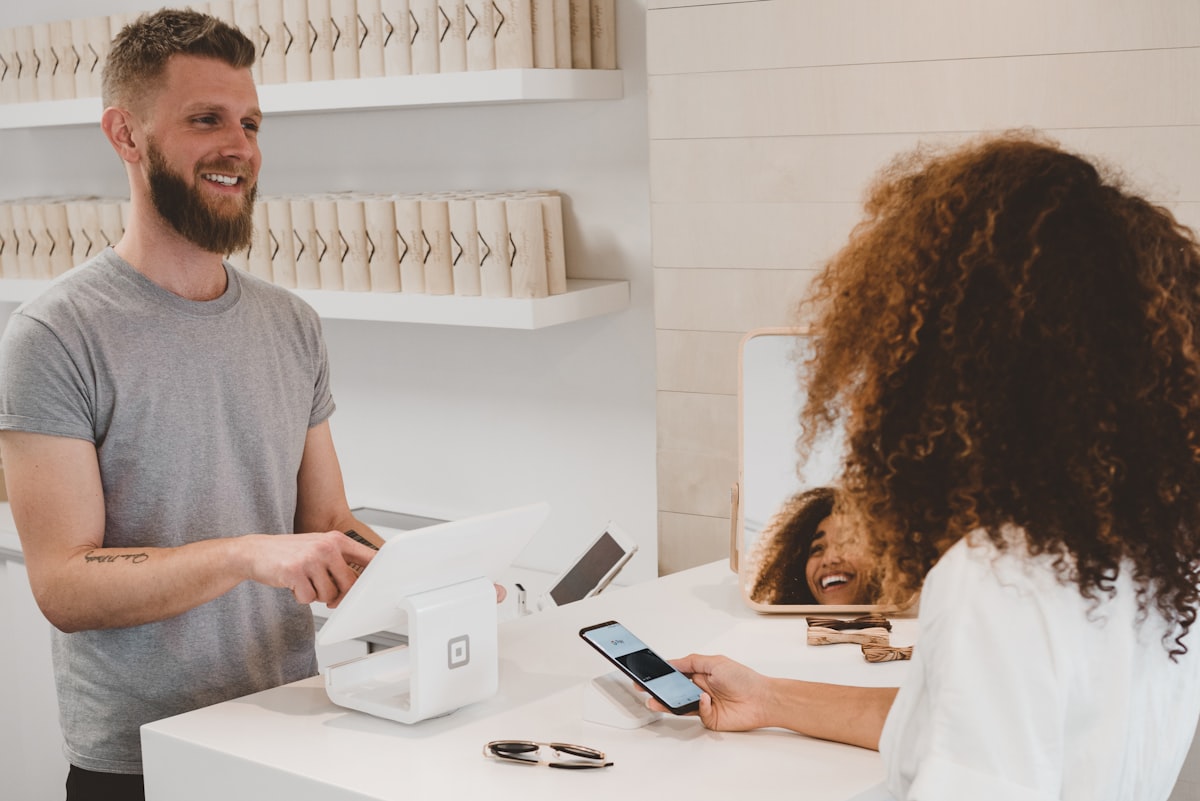
Photo: Paying with a credit card at a checkout. Image source: Unsplash.
Sarah still has two questions to answer in writing. Was the television defective when sold, which is a different claim from a change of mind? And did her card statement show the $463.32 charge, starting the 60-day billing-error clock? A defect claim and a billing-error dispute are stronger than a late change-of-mind return, but both need dates and documents. Sarah should photograph the screen fault, keep the box and receipt, and write down the date she first saw the fault, 5 December, and the date of the refused return, 18 December.
The chargeback timeline: the 60-day and 120-day milestones
The Federal Trade Commission guide, "Using Credit Cards and Disputing Charges," sets out the billing-error rules that apply to credit cards. The figures below come from that FTC guide, checked on 24 November 2026. The guide says you must dispute a billing error in writing within 60 days after the first statement that shows the error. The issuer must acknowledge your letter within 30 days. The issuer must resolve the dispute within at most two billing cycles, and in no event later than 90 days after it receives your letter.
Visa and Mastercard generally allow about 120 days for a cardholder dispute, measured from the transaction date or, for some kinds of dispute, from the date the problem was discovered. That 120-day figure is a network rule, not a federal statute, and the exact start date depends on the reason code the issuer uses. Do not treat 120 days as a safe date to wait until. File as soon as you have the facts, because the issuer will ask for the receipt, the statement, and proof that you tried to resolve the matter with the store first.
| Milestone | Deadline | What it means for Sarah |
|---|---|---|
| Routine store return, Best Buy | 15 days from purchase | Last day 12 December 2026; Sarah missed it by 6 days |
| Billing-error dispute in writing | 60 days after first statement showing the error | If the statement arrived 10 December, the letter is due by about 8 February 2027 |
| Issuer acknowledgement | Within 30 days of receiving the letter | Sarah should receive a written acknowledgement, not only a phone promise |
| Issuer resolution | At most 2 billing cycles, and no later than 90 days | The issuer must complete its investigation inside that limit |
| Visa and Mastercard dispute window | About 120 days | A separate network clock; file early and keep the reason code in writing |
Apply those dates to Sarah. Her purchase was 27 November 2026 for $463.32. The 15-day store window closed on 12 December. If her first card statement showing the charge is dated 10 December, the 60-day billing-error deadline falls about 8 February 2027. The 120-day network window, measured from 27 November, falls about 27 March 2027. Those later dates do not revive the store return. They give Sarah a written dispute route, with evidence, if the charge was a billing error or the goods were not as described.
Step by step: what to do when a return is refused
Follow these steps in order, and keep a dated record of each one. The measurable outcome at each step is a document, a reference number, or a written reply, not a verbal assurance.
Step 1: Check the receipt the same day. Find the last return date printed on the receipt, the seller name, and any restocking-fee note. Photograph the receipt and the price tag. Outcome: you know the exact last day and the exact seller.
Step 2: Return inside the window if you can. Bring the item in its original packaging, the receipt, the card used, and photo ID. Ask for a refund to the original payment method. Outcome: a refund receipt showing $463.32 in Sarah's example, or a written refusal with a reason.
Step 3: Ask for the reason in writing. If the store refuses, ask the manager to write the reason, the date, and the policy section on the receipt or on store letterhead. Note the name of the person you spoke to. Outcome: a dated written refusal you can send to the issuer.
Step 4: Contact the store in writing within 7 days. Use the store customer-service form or email, attach the receipt and the refusal note, and state the amount, the dates, and the remedy you want. Outcome: a case number and a written reply within the time the store promises.
Step 5: Send a billing-error letter to the card issuer within 60 days after the first statement showing the error. Send it to the billing-inquiries address on the statement, not the payment address. State your name, account number, the $463.32 charge, the purchase date, and why it is an error. Send it by certified mail with return receipt, and keep a copy. Outcome: a dated mailing receipt and, within 30 days, a written acknowledgement from the issuer.
Step 6: Gather the evidence pack. Include the receipt, the statement page, photographs of the fault, the store refusal, and the customer-service case number. Outcome: one file, paper or digital, that a reviewer can follow without a phone call.
Step 7: Track the 90-day resolution limit. Mark the date 90 days after the issuer receives your letter. If you hear nothing, write again and quote the FTC timeline. Outcome: a written resolution, a credit, or a written explanation you can use for the next step.
What a store can charge, and what it cannot change
A store can set a shorter return window for electronics, can require original packaging, and can refuse a return for a final-sale item if that term was stated before purchase. A store can also offer an exchange or a store credit instead of a refund, unless its own policy promises a refund to the original payment method.
A store policy does not change the billing-error rules. If a charge is a billing error, the FTC timeline applies to the issuer, even when the store window has closed. A store policy also does not erase a warranty claim for a defective product. A television with a line across the screen on first use is a different matter from a television you no longer want. Keep those two claims separate in every letter, because they are judged by different rules.
Watch for three traps. First, a gift receipt often gives an exchange, not a cash refund, and the refund goes to the buyer, not the recipient. Second, a purchase made through a marketplace seller may need a return to that seller, with its own deadline. Third, a chargeback filed without first contacting the store can be denied for that reason alone, so keep the store case number in the evidence pack.
Keep this proof from day one
Keep the receipt, the box, and the card statement together until the return window and the 60-day dispute window have both passed. Photograph the item before you return it, and photograph any fault with the date visible. Save every email and take a screenshot of any online return form before you submit it. If you speak to anyone by phone, write down the date, the name, and the reference number before you hang up.
For a Black Friday purchase, set two reminders on your phone on the day you buy: one for the last store-return day, and one for 50 days after the first statement showing the charge. The first reminder protects a routine refund. The second reminder leaves 10 days to write and mail a billing-error letter before the 60-day deadline.
Frequently asked questions
Can I return a Black Friday item after the store window closes? A routine return is normally refused after the window closes, as Sarah found at 21 days against a 15-day window. A billing-error dispute or a defect claim may still be available, but those follow different rules and need written evidence.
How long do I have to dispute a credit card charge? Under the FTC billing-error rules, you must dispute in writing within 60 days after the first statement showing the error. The issuer must acknowledge within 30 days and resolve within at most two billing cycles, and no later than 90 days.
What is the Visa and Mastercard chargeback time limit? Visa and Mastercard generally allow about 120 days, measured from the transaction date or, for some disputes, from the date the problem was discovered. The exact start date depends on the reason code, so file early.
Do I get the tax back on a refund? A full refund to the original payment method normally returns the full amount charged, including sales tax. In Sarah's example that is $463.32, not $429.00. A partial refund or an exchange may return a different amount, so check the refund receipt line by line.
Should I file a chargeback before contacting the store? No. Contact the store first, get a written refusal or case number, and include it in your letter to the issuer. An issuer can ask whether you tried to resolve the matter with the seller.
Does a chargeback hurt my credit score? A billing-error dispute itself is not a late payment, and the issuer must not treat the disputed amount as late while it investigates, under the FTC rules. A separate late payment on the same account can still affect your score, so keep paying the undisputed part of the bill on time.
Related guides on this blog
If a dispute moves to court, the filing fees and dollar limits matter. See Small Claims Court Filing Fees in 5 States, With the Dollar Limits. For another guide that works out state deadlines with real figures, see How Long a Landlord Has to Return a Security Deposit in 6 States. For a guide that works out real dollar figures before you sign anything, see What Is a Living Trust in the US? Cost vs a Will Worked Out.
Disclaimer: This post is general information, not legal advice. Return windows, card-network rules, and state laws change, and your receipt, card agreement, and statement control your case. Figures were checked on 24 November 2026. For a large amount or a disputed defect, consult a licensed attorney in your state.
Photo: Shoppers with bags during a sale. Image source: Unsplash.
Black Friday deals move fast, and returns move slower. A television that looked like a bargain on Friday can turn into a $463.32 problem by the third week of December if the store will not take it back. The rules that decide that outcome are not the same everywhere. A store return window, a credit card billing-error deadline, and a card-network chargeback window are three separate clocks, and each one starts on a different date.
This guide explains those three clocks in plain English, with real return windows checked on 24 November 2026, a worked example with exact dollar figures, and a step-by-step plan you can follow when a return is refused. It is general information, not legal advice. Store policies change, and the receipt and the card statement for your own purchase are the documents that control your case.
The short answer: three clocks, not one
Most shoppers treat a return as one event. In practice, three separate rules can apply. First, the store return policy sets the window for a normal return or exchange. Second, federal billing-error rules under the Fair Credit Billing Act give you a right to dispute a billing error in writing with your card issuer. Third, the card networks, Visa and Mastercard, run their own dispute process, often called a chargeback, with its own time limits.
Missing the first clock does not always end the matter, but it changes the question. After the store window closes, you are no longer asking for a routine return. You are asking whether the charge was a billing error, whether the goods were not as described, or whether the card network rules give you a separate route. That is why keeping dates, receipts, and written records matters from the day you buy.
Return windows at six major US stores
The table below gives the standard return window for each store, as checked on 24 November 2026. The window normally runs from the date of purchase or delivery, as the store policy states, and holiday extensions can change the dates in November and December. Read the receipt for the exact last day in your case, because a holiday extension, a membership tier, or a clearance sale can shorten or lengthen the window.
| Store | Standard return window | Electronics | What to bring |
|---|---|---|---|
| Amazon | 30 days from delivery | 30 days from delivery | Order number, original packaging |
| Walmart | 90 days | 30 days | Receipt or order confirmation |
| Target | 90 days | 30 days | Receipt, RedCard if used |
| Best Buy | 15 days | 15 days | Receipt, photo ID, original packaging |
| Costco | Satisfaction guarantee for most items | 90 days | Membership card, receipt if available |
| Macy's | 90 days | 90 days for most items; check the receipt | Receipt or order number |
Sources: Amazon, Walmart, and Target return windows checked 24 November 2026; Best Buy 15-day window as applied in the worked example below; Costco customer service return policy and Macy's return policy, checked 24 November 2026. The contrast is sharp. A television bought at Walmart on Black Friday still has a routine return route in late December for many items, while the same television bought at Best Buy has only 15 days. That 75-day gap is the difference between a refund and a dispute.
Two warnings apply to every row in the table. Opened software, opened media, and some opened electronics can be refused or charged a restocking fee even inside the window. Clearance, final-sale, and marketplace items sold by a third-party seller through a large store often follow the seller policy, not the store policy. Check who sold the item before you travel to the store.
Worked example: Sarah Mitchell and a $463.32 television
Sarah Mitchell, a hypothetical shopper in Ohio, buys a television on Black Friday, 27 November 2026, at Best Buy. The shelf price is $429.00. Sales tax in her county is 8 percent. The tax is $429.00 x 0.08 = $34.32. The total charged to her credit card is $429.00 + $34.32 = $463.32.
Sarah opens the box on 5 December, sets up the television, and finds a bright line across the screen that does not go away after a restart. She is busy at work, so she waits. She takes the television back to Best Buy on 18 December 2026, 21 days after purchase, and asks for a refund of $463.32.
The store refuses a routine refund. Best Buy's standard return window is 15 days, so the last day for a routine return was 12 December 2026. Sarah is 6 days late: 21 days minus 15 days equals 6 days. The refusal is not a statement that the television is fine. It is a statement that the routine return clock has run out. That distinction points Sarah to the next two clocks.
Photo: Paying with a credit card at a checkout. Image source: Unsplash.
Sarah still has two questions to answer in writing. Was the television defective when sold, which is a different claim from a change of mind? And did her card statement show the $463.32 charge, starting the 60-day billing-error clock? A defect claim and a billing-error dispute are stronger than a late change-of-mind return, but both need dates and documents. Sarah should photograph the screen fault, keep the box and receipt, and write down the date she first saw the fault, 5 December, and the date of the refused return, 18 December.
The chargeback timeline: the 60-day and 120-day milestones
The Federal Trade Commission guide, "Using Credit Cards and Disputing Charges," sets out the billing-error rules that apply to credit cards. The figures below come from that FTC guide, checked on 24 November 2026. The guide says you must dispute a billing error in writing within 60 days after the first statement that shows the error. The issuer must acknowledge your letter within 30 days. The issuer must resolve the dispute within at most two billing cycles, and in no event later than 90 days after it receives your letter.
Visa and Mastercard generally allow about 120 days for a cardholder dispute, measured from the transaction date or, for some kinds of dispute, from the date the problem was discovered. That 120-day figure is a network rule, not a federal statute, and the exact start date depends on the reason code the issuer uses. Do not treat 120 days as a safe date to wait until. File as soon as you have the facts, because the issuer will ask for the receipt, the statement, and proof that you tried to resolve the matter with the store first.
| Milestone | Deadline | What it means for Sarah |
|---|---|---|
| Routine store return, Best Buy | 15 days from purchase | Last day 12 December 2026; Sarah missed it by 6 days |
| Billing-error dispute in writing | 60 days after first statement showing the error | If the statement arrived 10 December, the letter is due by about 8 February 2027 |
| Issuer acknowledgement | Within 30 days of receiving the letter | Sarah should receive a written acknowledgement, not only a phone promise |
| Issuer resolution | At most 2 billing cycles, and no later than 90 days | The issuer must complete its investigation inside that limit |
| Visa and Mastercard dispute window | About 120 days | A separate network clock; file early and keep the reason code in writing |
Apply those dates to Sarah. Her purchase was 27 November 2026 for $463.32. The 15-day store window closed on 12 December. If her first card statement showing the charge is dated 10 December, the 60-day billing-error deadline falls about 8 February 2027. The 120-day network window, measured from 27 November, falls about 27 March 2027. Those later dates do not revive the store return. They give Sarah a written dispute route, with evidence, if the charge was a billing error or the goods were not as described.
Step by step: what to do when a return is refused
Follow these steps in order, and keep a dated record of each one. The measurable outcome at each step is a document, a reference number, or a written reply, not a verbal assurance.
Step 1: Check the receipt the same day. Find the last return date printed on the receipt, the seller name, and any restocking-fee note. Photograph the receipt and the price tag. Outcome: you know the exact last day and the exact seller.
Step 2: Return inside the window if you can. Bring the item in its original packaging, the receipt, the card used, and photo ID. Ask for a refund to the original payment method. Outcome: a refund receipt showing $463.32 in Sarah's example, or a written refusal with a reason.
Step 3: Ask for the reason in writing. If the store refuses, ask the manager to write the reason, the date, and the policy section on the receipt or on store letterhead. Note the name of the person you spoke to. Outcome: a dated written refusal you can send to the issuer.
Step 4: Contact the store in writing within 7 days. Use the store customer-service form or email, attach the receipt and the refusal note, and state the amount, the dates, and the remedy you want. Outcome: a case number and a written reply within the time the store promises.
Step 5: Send a billing-error letter to the card issuer within 60 days after the first statement showing the error. Send it to the billing-inquiries address on the statement, not the payment address. State your name, account number, the $463.32 charge, the purchase date, and why it is an error. Send it by certified mail with return receipt, and keep a copy. Outcome: a dated mailing receipt and, within 30 days, a written acknowledgement from the issuer.
Step 6: Gather the evidence pack. Include the receipt, the statement page, photographs of the fault, the store refusal, and the customer-service case number. Outcome: one file, paper or digital, that a reviewer can follow without a phone call.
Step 7: Track the 90-day resolution limit. Mark the date 90 days after the issuer receives your letter. If you hear nothing, write again and quote the FTC timeline. Outcome: a written resolution, a credit, or a written explanation you can use for the next step.
What a store can charge, and what it cannot change
A store can set a shorter return window for electronics, can require original packaging, and can refuse a return for a final-sale item if that term was stated before purchase. A store can also offer an exchange or a store credit instead of a refund, unless its own policy promises a refund to the original payment method.
A store policy does not change the billing-error rules. If a charge is a billing error, the FTC timeline applies to the issuer, even when the store window has closed. A store policy also does not erase a warranty claim for a defective product. A television with a line across the screen on first use is a different matter from a television you no longer want. Keep those two claims separate in every letter, because they are judged by different rules.
Watch for three traps. First, a gift receipt often gives an exchange, not a cash refund, and the refund goes to the buyer, not the recipient. Second, a purchase made through a marketplace seller may need a return to that seller, with its own deadline. Third, a chargeback filed without first contacting the store can be denied for that reason alone, so keep the store case number in the evidence pack.
Keep this proof from day one
Keep the receipt, the box, and the card statement together until the return window and the 60-day dispute window have both passed. Photograph the item before you return it, and photograph any fault with the date visible. Save every email and take a screenshot of any online return form before you submit it. If you speak to anyone by phone, write down the date, the name, and the reference number before you hang up.
For a Black Friday purchase, set two reminders on your phone on the day you buy: one for the last store-return day, and one for 50 days after the first statement showing the charge. The first reminder protects a routine refund. The second reminder leaves 10 days to write and mail a billing-error letter before the 60-day deadline.
Frequently asked questions
Can I return a Black Friday item after the store window closes? A routine return is normally refused after the window closes, as Sarah found at 21 days against a 15-day window. A billing-error dispute or a defect claim may still be available, but those follow different rules and need written evidence.
How long do I have to dispute a credit card charge? Under the FTC billing-error rules, you must dispute in writing within 60 days after the first statement showing the error. The issuer must acknowledge within 30 days and resolve within at most two billing cycles, and no later than 90 days.
What is the Visa and Mastercard chargeback time limit? Visa and Mastercard generally allow about 120 days, measured from the transaction date or, for some disputes, from the date the problem was discovered. The exact start date depends on the reason code, so file early.
Do I get the tax back on a refund? A full refund to the original payment method normally returns the full amount charged, including sales tax. In Sarah's example that is $463.32, not $429.00. A partial refund or an exchange may return a different amount, so check the refund receipt line by line.
Should I file a chargeback before contacting the store? No. Contact the store first, get a written refusal or case number, and include it in your letter to the issuer. An issuer can ask whether you tried to resolve the matter with the seller.
Does a chargeback hurt my credit score? A billing-error dispute itself is not a late payment, and the issuer must not treat the disputed amount as late while it investigates, under the FTC rules. A separate late payment on the same account can still affect your score, so keep paying the undisputed part of the bill on time.
Related guides on this blog
If a dispute moves to court, the filing fees and dollar limits matter. See Small Claims Court Filing Fees in 5 States, With the Dollar Limits. For another guide that works out state deadlines with real figures, see How Long a Landlord Has to Return a Security Deposit in 6 States. For a guide that works out real dollar figures before you sign anything, see What Is a Living Trust in the US? Cost vs a Will Worked Out.
Disclaimer: This post is general information, not legal advice. Return windows, card-network rules, and state laws change, and your receipt, card agreement, and statement control your case. Figures were checked on 24 November 2026. For a large amount or a disputed defect, consult a licensed attorney in your state.


Comments
Post a Comment