Tenant Rights in the US: What Your Landlord Cannot Do (and What to Do If They Do)

Photo: Renting a home in the US. Image source: Unsplash.
Your landlord owns the building. That does not mean your landlord owns your rights. In the United States, renting a home comes with legal protections that apply even if your lease never mentions them, and even if you never had a written lease at all. A landlord cannot change the locks to force you out, shut off your heat in winter, walk into your apartment whenever they like, or keep your security deposit just because they feel like it. The problem is that many renters do not know where the line is — so they either put up with something illegal, or they take a step, such as stopping rent, that weakens their own case. This guide draws the line in plain English, state by state, with real deadlines and a worked example you can follow.
For the broad overview, start with our guide to Tenant Rights in the US: What Renters Need to Know in 2026. This post goes further: it names what a landlord cannot do, gives the deadline for each state, and shows what to do, step by step, if your landlord does it anyway.
7 Things Your Landlord Cannot Do
Rules vary by state and city, but these seven limits apply in most of the United States. If your lease says the opposite, the lease clause is often unenforceable — a landlord cannot make you sign away a basic protection.
- Enter without proper notice. Your rented home is your home. Except in a true emergency, such as a fire or a burst pipe, a landlord must give advance notice and state the reason. In California that means 24 hours of written notice in most cases.
- Lock you out or shut off utilities to force you out. Changing the locks, removing the front door, shutting off water, heat, or electricity, or throwing your belongings on the street is called a self-help eviction, and it is illegal in most states — even if your rent is late.
- Evict you without a court order. A legal eviction needs written notice, a court filing, a hearing, and an order enforced by a court officer. A verbal threat to “be out by Friday” is not an eviction.
- Refuse to keep the home habitable. Landlords must keep heat, hot water, plumbing, electricity, and the structure safe and sanitary. A broken dishwasher is an annoyance; no heat in winter, a sewage leak, or a roof that lets in rain is a habitability problem.
- Discriminate against you. Under the federal Fair Housing Act, a landlord cannot refuse housing, charge different terms, or evict you because of race, color, religion, sex, disability, familial status, or national origin. Many states and cities add more categories.
- Retaliate against you for complaining. A landlord cannot raise your rent, cut off services, or start an eviction because you reported a repair problem, contacted a housing inspector, or joined a tenant group.
- Keep your security deposit without an itemized reason. A landlord may deduct unpaid rent or damage beyond normal wear and tear, but must return the rest — with an itemized list of any deductions — by the deadline your state sets.
Your Rights by State: Security Deposit, Entry Notice, and Habitability
Tenant law is state law. The three numbers that cause the most disputes are the security-deposit deadline, the entry notice period, and the habitability rule. The table below gives those numbers for four large states, from court and government sources checked live on 19 Nov 2026. Always check your city rules too — some cities are stricter than the state.
| State | Security deposit return deadline | Entry notice | Habitability |
|---|---|---|---|
| California | 21 days after you move out to return the deposit or send an itemized list of deductions (Civil Code 1950.5) | 24 hours written notice in most cases (Civil Code 1954), except in an emergency | Landlord must keep the home habitable under Civil Code 1941.1 — heat, hot water, plumbing, safe wiring, and a weatherproof roof and windows |
| Texas | 30 days after you move out and give a forwarding address (Property Code 92.103) | No fixed statewide number of hours — your lease controls, and entry must be reasonable; check the lease before you sign | Landlord must make a diligent effort to repair conditions that affect health or safety after written notice (Property Code 92.052) |
| New York | 14 days after you move out to return the deposit or give an itemized statement (General Obligations Law 7-108) | Reasonable advance notice; the landlord must give notice before entry except in an emergency, and New York City rules can be stricter | Every lease carries a warranty of habitability under Real Property Law 235-b — the home must be fit to live in, with heat, hot water, and working plumbing |
| Florida | 15 days to return the deposit if the landlord makes no claim; 30 days to send a written notice of any claim (Florida Statute 83.49) | Reasonable notice, at a reasonable time, except in an emergency | Landlord must comply with building, housing, and health codes and keep plumbing, electrical, and heating systems in good working order (Florida Statute 83.51) |
Two penalties in that table are worth remembering. In California, a landlord who keeps a deposit in bad faith can be ordered to pay the deposit back plus up to two times the deposit in extra damages. In Texas, a landlord who retains a deposit in bad faith can be liable for up to three times the portion wrongfully withheld. Those are not automatic payouts — a judge decides — but they explain why a written demand letter is often taken seriously. Before you sign a lease, read our guide to how to read a rental lease before you sign, so the deposit, entry, and repair clauses are clear before you move in.
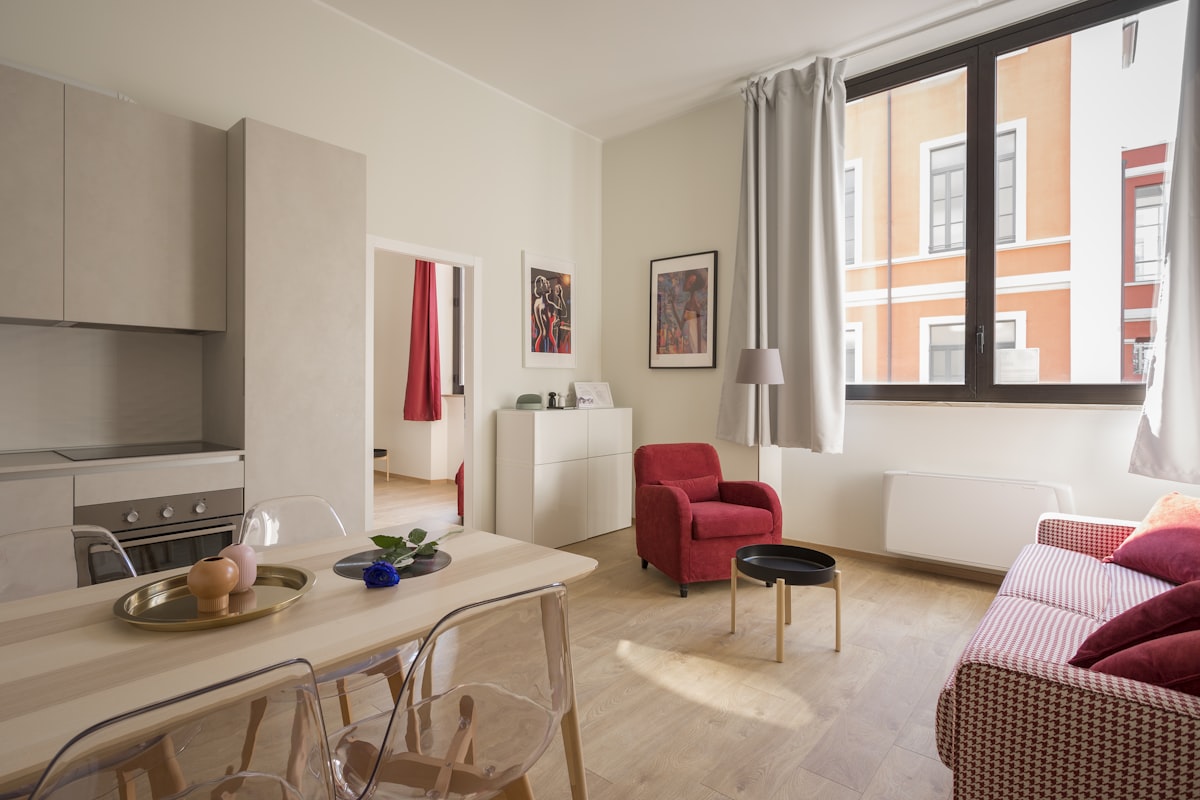
Photo: A rental home should be safe, clean, and habitable. Image source: Unsplash.
Worked Example: Maya and a $1,200 Deposit That Was 30 Days Overdue
Maya is a hypothetical tenant, not a real person, but her numbers are real: they follow the California rules above. Maya, 29, rented a one-bedroom apartment in Sacramento, California. She paid a $1,200 security deposit when she moved in. She moved out on 30 September 2026, left the apartment clean, returned the keys, and gave the landlord her new mailing address in writing the same day.
In California, the landlord had 21 days to return the deposit or send an itemized list of deductions. That deadline was 21 October 2026. The landlord sent nothing — no money, no list, no message. By 20 November 2026, the landlord was 30 days past the deadline, and 51 days had passed since Maya moved out. Here is the calculation:
| Item | Amount |
|---|---|
| Security deposit Maya paid | $1,200 |
| Amount the landlord returned by the 21-day deadline | $0 |
| Deposit still owed to Maya | $1,200 |
| Extra damages a judge could award if the landlord kept the deposit in bad faith — up to 2 times the deposit ($1,200 x 2) | Up to $2,400 |
| Total Maya could ask a judge for | Up to $3,600 |
Maya did not go straight to court. On 22 October, the day after the deadline, she sent a written demand by email and by mail: the move-out date, the $1,200 deposit, the 21-day deadline, and a request for the full $1,200 within 7 days. She kept a copy, the mailing receipt, her move-out photos, and the forwarding-address letter. If the landlord had sent an itemized list claiming, say, $300 for a broken blind, Maya could have checked the receipt and disputed only that $300 — but with no list at all, the landlord had no deduction to defend. If the demand failed, her next step would be small claims court, where deposit cases are common. Our guide to small claims court in the US explains how to file, and our step-by-step guide to how to get your security deposit back walks through the same demand-letter process in detail.
What to Do If Your Landlord Does It Anyway — Step by Step
Do not move out in anger, and do not stop paying rent without advice — in many states, stopping rent the wrong way can lead to eviction even when the landlord is at fault. Follow this order instead, and keep a copy of everything.
Step 1: Write it down the same day (Day 1). Note the date, time, and exactly what happened. Take photos or a short video. Save texts, emails, and voicemails. Write down the names of anyone who saw it. A dated photo of a broken heater or a changed lock is worth more than a memory a month later.
Step 2: Notify the landlord in writing (Days 1 to 3). Email or a letter is better than a phone call. Describe the problem, quote the lease or the rule if you know it, and give a clear deadline — 7 days for a serious repair, 14 days for a less urgent one. Ask for a reply in writing. Keep a copy and proof that you sent it.
Step 3: Report it if nothing changes (Days 7 to 14). For unsafe conditions, contact your local housing inspector or health department and ask for an inspection. For discrimination, contact the US Department of Housing and Urban Development (HUD) or your state fair housing agency promptly, because complaint deadlines apply. For a lockout or a shutoff, contact the police non-emergency line and a tenant legal aid office the same day — do not wait.
Step 4: Send a demand letter and get advice (Days 14 to 30). State what the landlord did, what the law requires, what you want, and a deadline — usually 7 to 14 days. A tenant legal aid office or law school clinic can often review the letter for free. If you cannot afford a lawyer, see our guide to how to get free legal help in the US.
Step 5: File in small claims court if the money is still owed (Days 30 to 60). Deposit disputes, unpaid repair costs, and illegal lockout damages are often small claims cases. Bring your lease, photos, the demand letter, receipts, and the landlord’s itemized list, if any. Filing fees are usually modest, and you do not need a lawyer for most small claims.
Lockouts and Shutoffs: The Florida Example
Florida shows how seriously the law treats a self-help eviction. The Florida Department of Agriculture and Consumer Services explains that a landlord may not shut off utilities, change the locks, remove doors, or remove a tenant’s belongings to force a tenant out. A tenant who is locked out in this way may sue for actual and consequential damages, or for three months’ rent, whichever is greater. Worked out: if your rent is $1,500 a month, three months’ rent is $1,500 x 3 = $4,500. That is the floor a tenant could ask for, before any extra losses, such as a hotel bill, are counted. The lesson travels well beyond Florida: if you are locked out, do not break back in and do not move out and give up — call for help the same day, keep every receipt, and keep the lockout evidence.

Photo: Renters have a right to privacy in their home. Image source: Unsplash.
Frequently Asked Questions
Can my landlord enter my apartment without notice?
Only in a true emergency, such as a fire or a burst pipe. In most states, the landlord must give advance notice and state the reason. In California, that is usually 24 hours of written notice. If entry becomes a pattern, send a written request for proper notice and keep a log of each visit.
Can my landlord change the locks if I am late on rent?
No. Late rent does not give a landlord the right to lock you out, shut off utilities, or remove your belongings. The landlord must give written notice and go through the court eviction process. If you are locked out, get help the same day and keep your receipts.
How long does my landlord have to return my security deposit?
It depends on your state: 21 days in California, 30 days in Texas, 14 days in New York, and 15 days in Florida if no claim is made (30 days to send a claim notice). The landlord must return the deposit or send an itemized list of deductions by that deadline.
What counts as normal wear and tear?
Faded paint, light carpet wear, and small scuffs from ordinary living are normal wear and tear, and a landlord cannot charge you for them. A large stain, a broken window, or a hole in the wall is different. Dated move-in and move-out photos are your best proof of the difference.
Can my landlord raise the rent because I complained about repairs?
That is retaliation, and it is illegal in most states. Keep the repair request, the landlord’s reply, and the rent-increase notice with their dates. A rent increase that follows a complaint by days or weeks is much easier to challenge when the paper trail is clear.
What if I do not have a written lease?
You still have rights. Many tenant protections apply even with an oral or month-to-month agreement, although a written lease makes your rights easier to prove. Keep rent receipts, payment records, and copies of every message with your landlord.
The Bottom Line
Your landlord cannot enter without notice, lock you out, shut off your utilities, evict you without a court order, discriminate against you, punish you for complaining, or keep your deposit without an itemized reason and a deadline. The strongest response is not a confrontation — it is a paper trail: dated photos, a written request with a deadline, a demand letter, and help from a housing inspector or a legal aid office if the problem continues. Maya’s $1,200 deposit became a claim of up to $3,600 in California not because she argued the loudest, but because she knew the 21-day deadline, wrote it down, and kept the proof. Know your state’s numbers, write everything down, and act on the deadline — that is how tenant rights work in practice.
Disclaimer: This article is for general information, not legal advice. Tenant laws vary by state and city and change over time. For advice about your specific situation, contact a licensed attorney or a local tenant legal aid organization in your state.
Sources checked 19 Nov 2026: California Courts, Self-Help Guide — Guide to security deposits in California, 21 days to return the deposit, deductions over $125 need receipts, and up to two times the deposit in damages if retained in bad faith — https://selfhelp.courts.ca.gov/guide-security-deposits-california ; Texas State Law Library — Security Deposits, 30 days under Property Code 92.103, and up to three times the wrongfully withheld portion under 92.109 — https://guides.sll.texas.gov/landlord-tenant-law/security-deposits ; New York Attorney General — Tenant Rights Guide and Recovering Rent Security Deposits, 14 days under General Obligations Law 7-108 — https://ag.ny.gov/resources/individuals/tenants-homeowners ; Florida Department of Agriculture and Consumer Services — Landlord/Tenant Law in Florida, 15 days to return the deposit if no claim is made and 30 days to send a claim notice, and the lockout remedy of actual damages or three months’ rent — https://www.fdacs.gov/Consumer-Resources/Landlord-Tenant-Law-in-Florida ; California Civil Code 1954 (24 hours’ written notice of entry) and 1941.1 (habitability).


Comments
Post a Comment