How to Write a Simple Rental Agreement in the US

Photo: A model house and keys. Image source: Unsplash.
A simple rental agreement needs nine things: the names of everyone on the lease, the address, the rent and due date, the length of the stay, the deposit, who pays which utilities, who handles repairs, the rules on pets and guests, and the signatures. Get those nine right, and most landlord-tenant problems never start. Leave two or three out, and a small disagreement turns into a fight about what was promised.
This guide shows you how to write one, clause by clause, with the state rules that change the numbers. Deposit limits and return deadlines below were checked against official state sources on 17/11.
Start with the money: the deposit is where states differ most
Rent is whatever you agree on. The deposit is not. Several states cap it by law, and the deadline to return it changes too. Here are three states, checked 17/11:
| State | Deposit limit | Return deadline | Source (checked 17/11) |
|---|---|---|---|
| California | 1 month's rent for most landlords | 21 days after move-out | California Civil Code 1950.5; California Department of Real Estate |
| New York | 1 month's rent | 14 days after move-out, with an itemized statement | New York Attorney General, Tenant Rights Guide; General Obligations Law 7-108 |
| Texas | No statewide cap | 30 days after move-out | Texas State Law Library; Texas Property Code 92.103 |
California's 1-month cap took effect on July 1, 2024 under AB 12, and it applies to most landlords under Civil Code section 1950.5, according to the California Department of Real Estate (checked 17/11). New York also caps the deposit at one month's rent and gives the landlord 14 days to return it with an itemized list of any deductions, according to the New York Attorney General (checked 17/11). Texas sets no cap in the Property Code, but the landlord still has 30 days to return the deposit or send an itemized list of deductions, according to the Texas State Law Library (checked 17/11).
Write the deposit into the agreement as a number, not a phrase. "Deposit: $2,200, equal to one month's rent" beats "a standard deposit" every time.
A worked example: Maya in Los Angeles
Maya, 29, rents a one-bedroom in Los Angeles for $2,200 a month. The landlord asks for a $4,400 security deposit, two months' rent, plus $300 for the keys and remote controls.
Under California's cap, the most the landlord can charge as a security deposit is one month's rent:
- Rent: $2,200 a month
- Deposit asked: $4,400
- Legal maximum deposit: $2,200
- Overcharge: $2,200
Maya points to the cap, and the landlord corrects the agreement to a $2,200 deposit. Her move-in total becomes $2,200 first month's rent plus a $2,200 deposit, or $4,400, instead of the $6,600 she was first asked to pay. That one line in the agreement saved her $2,200 on day one.
Now compare that with a tenant in Austin, Texas, renting at $1,400 a month. Texas has no cap, so a $1,400 deposit is one month, and a $2,800 deposit would be legal there, though many tenants would negotiate it down. Same agreement, same words, very different numbers. That is why the state table above goes into the agreement before you sign, not after.
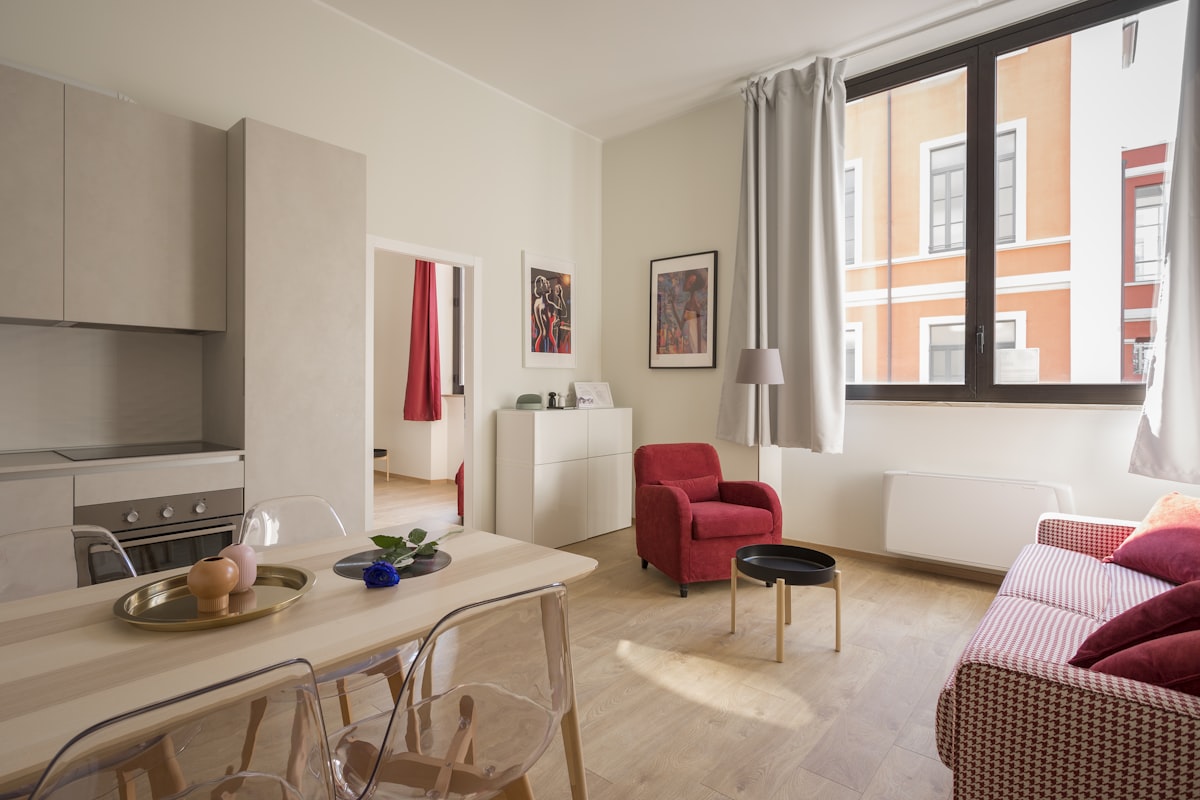
Photo: Walk through the apartment and photograph every room before you move in. Image source: Unsplash.
How to write it: 7 steps
Step 1: Name everyone who lives there. List each adult tenant by full legal name. Children can be listed by name too, but only adults sign. Anyone not named is a guest, and the agreement should say how long a guest can stay, often 14 days in a row, before they count as an extra occupant.
Step 2: Describe the place and the term. Write the full street address and unit number, the start date, and the end date. A 12-month lease from June 1, 2026 to May 31, 2027 leaves nothing to argue about. For a month-to-month tenancy, write that it renews each month and say how much notice either side must give to end it. In California that notice is 30 days if the tenant has lived there less than a year, and 60 days after a year. In Texas it is 30 days. In New York it rises from 30 to 60 to 90 days as the tenancy gets longer.
Step 3: Put the rent in numbers. Write the monthly rent, the due date, how it is paid, and the late fee. A late fee of $50 after a 5-day grace period is a normal shape for a simple agreement. Write the grace period down. Without one, a tenant who pays on the 3rd has no idea whether they owe a fee.
Step 4: Spell out the deposit. Write the deposit amount, what it covers, and the return deadline from the table above. Add one line: the landlord will return it with an itemized list of any deductions. That line alone prevents most deposit disputes.
Step 5: Split the bills and the repairs. List every utility and who pays it: electricity, gas, water, internet, trash. Then write who handles repairs. A good simple rule: the tenant reports problems in writing within 48 hours, and the landlord fixes anything that affects heat, water, or safety within a reasonable time. Small things, like a light bulb, can fall to the tenant, but say so in writing.
Step 6: Write the house rules in plain words. Pets, smoking, guests, parking, noise, and changes to the unit. "One dog under 25 pounds, $250 pet deposit" is clear. "No pets" is clear. "Pets allowed, ask first" is how arguments start. If the landlord charges a pet deposit, write the amount next to the rule.
Step 7: Walk through, photograph, sign, and copy. Walk through the unit together before move-in, photograph every room, and note scratches, stains, and broken items on a move-in checklist attached to the agreement. Both sides sign and date every page, or at least the last page and the checklist. Each side keeps a signed copy. A photo of a signed agreement on a phone is a backup, not a substitute for a paper or PDF copy each side holds.
Checklist: every clause a simple agreement should have
- Full legal names of landlord and all adult tenants
- Property address, unit number, and parking or storage included
- Start date, end date, and what happens when the term ends
- Monthly rent, due date, payment method, grace period, and late fee
- Security deposit amount and return deadline
- Utilities: who pays each one
- Repairs and maintenance: who does what, and how fast
- Pets, smoking, guests, and overnight stays
- Notice required to end a month-to-month tenancy
- Move-in condition checklist, signed by both sides
- Signatures and dates for landlord and tenants

Photo: Read the full agreement before you sign it. Image source: Unsplash.
Clauses to leave out
Some clauses look strong and are worthless, or worse. A clause that lets a landlord change the locks to force a tenant out is not enforceable in most states. A clause that says the tenant gives up the right to a habitable home, with working heat and water, will not hold up either. And a blank fee, like "tenant pays all fees the landlord charges," means nothing without a number next to it. If a clause would surprise a fair-minded reader, take it out and write the real number instead.
Also skip the fine print that says nothing. "Tenant agrees to follow all rules" is not a rule. Write the rule, or leave it out.
What to do before you sign
Read the agreement out loud, line by line, with the other side in the room. That sounds slow. It takes about 15 minutes for a simple agreement, and it catches the mistakes that cost money later: a wrong address, a rent figure typed as $2,100 instead of $2,200, a move-in date that falls on a Sunday when nobody can hand over the keys.
Then check three numbers against the state table: the deposit, the return deadline, and the notice period. If any of them is wrong for your state, fix the agreement before anyone signs. After signing, changing a number means a written addendum signed by both sides.
FAQ
How long should a simple rental agreement be?
Two to three pages covers a standard apartment. If it runs past five pages for a simple one-bedroom, some of it is filler. Keep the nine items in the checklist and cut the rest.
Does a rental agreement have to be in writing?
In most states, a lease for a year or more must be in writing to be enforceable. A written agreement is worth having even for a month-to-month stay, because it settles the rent, the deposit, and the notice period before anyone disagrees.
How much can a landlord charge for a security deposit?
It depends on the state. California and New York cap it at one month's rent, according to state sources checked 17/11. Texas sets no statewide cap. Check your state's rule before you sign.
Can I write my own rental agreement without a lawyer?
Yes, for a simple lease between a landlord and a tenant who agree on the terms. Use the checklist above, fill in real numbers, and keep a signed copy. Get a lawyer involved if the property has shared spaces, a business use, or a tenant who is behind on rent.
What happens if the landlord does not return the deposit on time?
In California the landlord has 21 days, in New York 14 days, and in Texas 30 days, according to the state sources in the table above. If the deadline passes with no refund or itemized list, write a short demand letter asking for the deposit, and keep a copy. Small claims court is the usual next step.
Related guides
Before you sign, read How to Read a Rental Lease Before You Sign It so you know what to look for, and after you move out, How to Get Your Security Deposit Back walks through getting the deposit back step by step.
This article is general information, not legal advice. Landlord-tenant law changes by state and city, and deposit caps and deadlines change too. Check your state law or talk to a licensed lawyer in your state before you sign.
Sources: California Civil Code 1950.5 and California Department of Real Estate (checked 17/11); New York Attorney General, Tenant Rights Guide (checked 17/11); Texas State Law Library, Security Deposits (checked 17/11).


Comments
Post a Comment